Rabbits Are the Foundation for Raising Animals Again
Rabbits Were There Almost From the Beginning
Our history with rabbits goes back almost as far as our history with raising our own food, and that history helps explain why they are the first livestock we want to bring back: they fit the system we are building.In the spring of 2011, while we were still living at our first rental in Portland, Oregon, we started raising chickens from chicks. Those first birds were egg layers, followed soon after by our first batch of meat chickens.
By that summer, we were ready for rabbits.
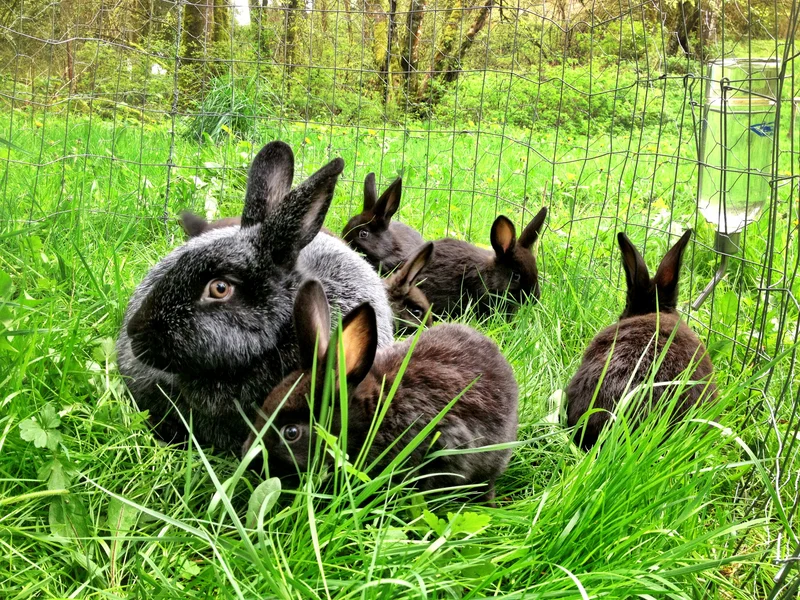
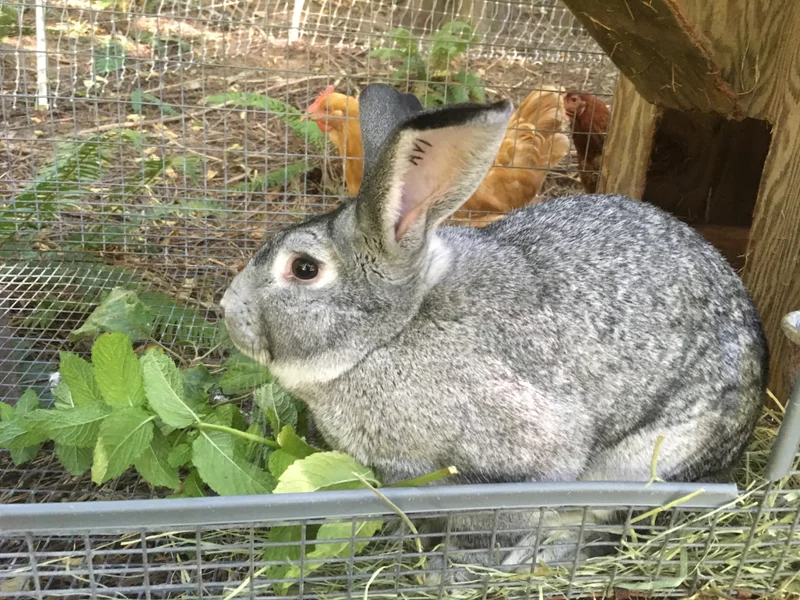
We built our first hutches and acquired Silver Fox rabbits from Connie Van Dyke at Tabor Tilth Farm in Portland's Mount Tabor neighborhood. Connie's small permaculture property especially interested us because nutrients from the rabbits moved through the property and helped grow things like bamboo, which could cycle back as supplemental rabbit feed.
It was one of my first opportunities to see livestock as something more than an animal that produces food. The animal could be part of a larger system.
That summer we took part in our first rabbit harvest with Connie. Not long afterward we harvested our meat chickens. Before that year, I had spent nearly two decades working around food, between restaurants and grocery retail, but I had never personally dispatched an animal.
That changed quickly.
Learning What Worked and What Didn't
Later in 2011, we moved to what we call the Borgeous property, a larger place where other people were also raising animals. We brought the rabbits with us and continued learning.
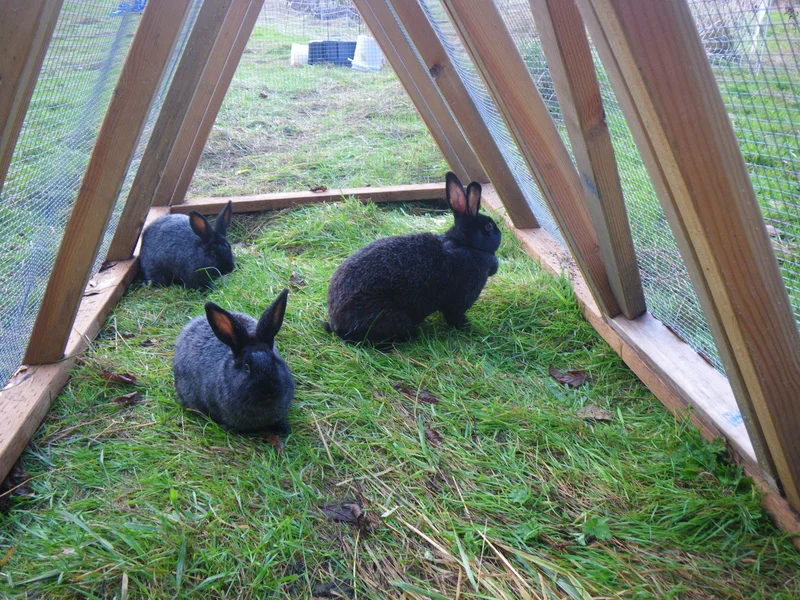
One of our experiments was keeping rabbits directly on the ground and moving their enclosures around. I liked some things about it, especially giving them access to grass. Still, we eventually learned a difficult lesson: we weren't moving them often enough, and our rabbits developed intestinal parasites.When we moved to the Butler property, the six-acre place we lived on under a mortgage for about eight and a half years, we went back to elevated housing.
Our later hutches were relatively simple individual structures on legs. They had wire floors, an enclosed side where a rabbit could get away from the weather, and a more open portion for food, water, and fresh air.
We moved those hutches around inside areas occupied by our chickens. That created a very simple relationship that worked extremely well. Rabbits dropped feed and manure. Chickens scratched underneath them, cleaned up what they could use, and spread everything around.
Over years, that fertility accumulated.
By the time we left the Butler property, the difference in the soil was hard to miss.
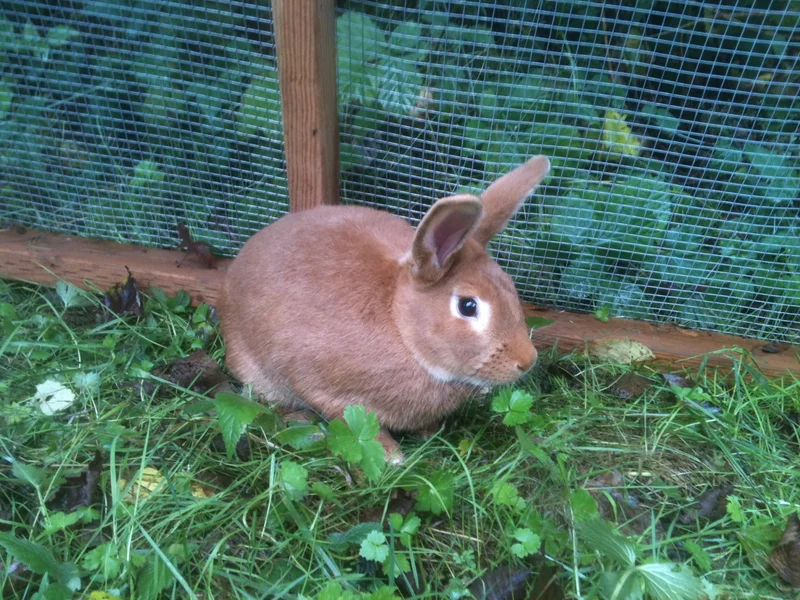
We eventually raised Silver Foxes, New Zealands, Chinchillas, and crosses between them. Some of our later rabbits were large animals, which we appreciated for meat production.
But our breeding program wasn't particularly disciplined. We tended to overfeed some of our breeders, and we did not breed them as consistently as we probably should have. They produced food, but looking back, we know the rabbitry could have been considerably more productive.
That is one of the things we intend to do differently this time.
Then We Started Over
When we left Oregon, we eventually harvested the rabbits along with the rest of our livestock. For the first time in more than a decade, we arrived at a new property without chickens, rabbits, ducks, goats, pigs, turkeys, or any of the other farm animals that had become part of normal life.
That wasn't because we had stopped wanting them.
We were front-loading ownership.
There is a major difference between buying a developed property with a mortgage and buying largely undeveloped land and building out the infrastructure yourself.At the Butler property, we arrived with somewhere around 40 or 50 individual animals between rabbits and poultry. We added ducks and goats fairly quickly because much of what we needed already existed or could be adapted from something else.
Here in Michigan, we started with the land.
We cleared. We built. We bought two 10-by-20 buildings from an Amish builder. We improved the road. We worked on power, storage, heat, tools, equipment, and winter comfort. We bought the tractor and have been paying for it steadily
Instead of financing a finished homestead all at once, we have essentially been constructing the capability piece by piece and paying for those pieces as we go.
This approch takes much longer.
For the last couple of years we talked about reintroducing livestock. Every year started with big plans. And every year something else legitimately needed to happen first.
This year we decided that rabbits were the first animal project we were going to complete, because they best match where we are now.This Time, We Wanted to Be Ready First
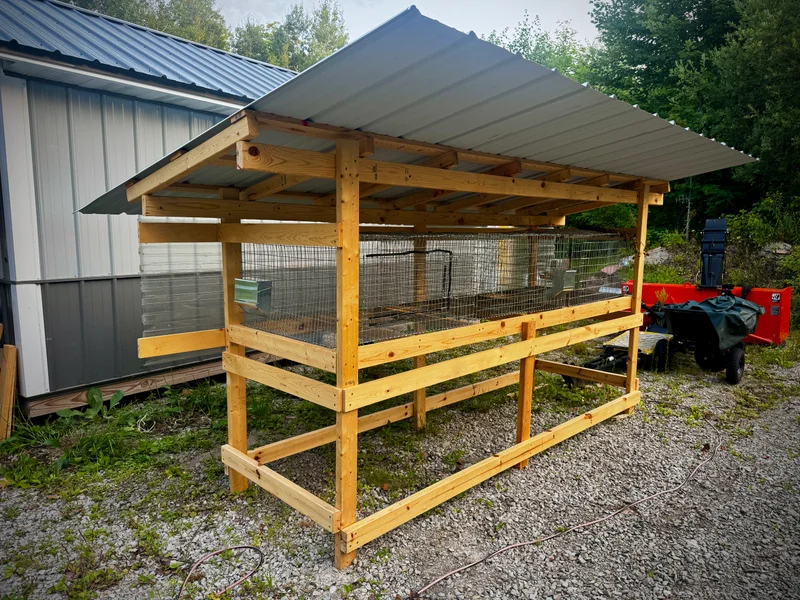
The biggest physical piece was the rabbit hutch.
I am more satisfied with that hutch than anything else I have built myself. I put a lot of thought into the design before construction started, and not every part of the preliminary plan survived contact with reality.
That's actually one of the things I like about it.
Years of building things have made me much more comfortable changing a design once I can physically see how something is going to work. Some ideas that sounded elegant during planning became unnecessarily complicated once I started building them. Instead of forcing the plan, I changed it.
The result feels much more complete than the rabbit setups we improvised in the past.
Eventually, especially because of our Upper Peninsula winters, I would like to experiment with an even more protected design inspired by The Rabbitry Center. One idea we like includes a ramp leading from the main hutch down into a partially buried shelter that could provide a more stable environment and serve as a nesting area.
But we don't have to build the final version of everything before we begin.
We have a solid hutch. We have feeders. We have water equipment. We have the supplies we need. We have a plan.
And we have feed.
Purchased Feed Is the Starting Point, Not the Destination
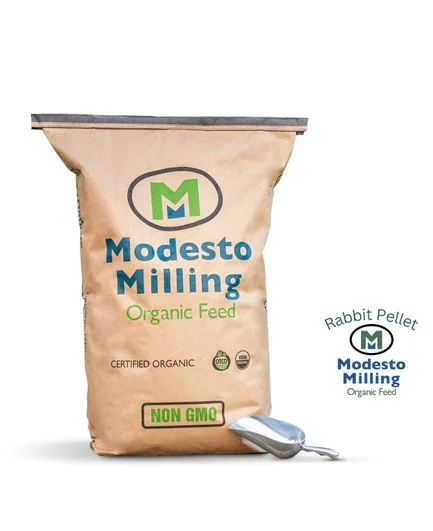
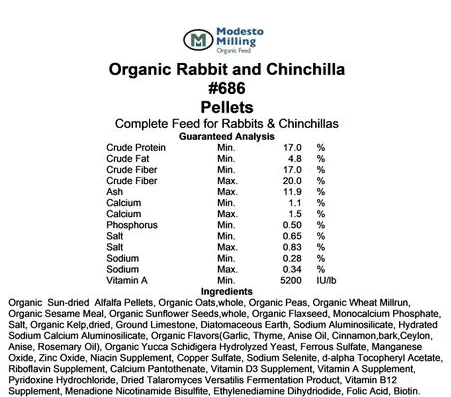
For now, we are going to feed an organic rabbit feed we can get through Azure Standard.
It isn't inexpensive.
Animal feed in general isn't inexpensive, and ultimately I would be perfectly happy buying from a local mill if we found one producing feed to standards we were comfortable with. Right now, Azure gives us a known source that we can reliably obtain through a local drop.
Interestingly, that same drop is at the farm where we participate in a cow share. Other local food producers are connected to the same place, so there is already a small community of people around us who understand why someone might care about how an animal was fed.
If we eventually produce more rabbits than we need, I would like to sell some of that surplus and ideally recover part of our feed expense.
But I don't want to build this around the assumption that we have to sell rabbits.
My experience has taught me to build food systems around feeding ourselves first. If the system produces an excess, find a productive outlet for it.
The longer-term goal is also to reduce how much feed has to arrive on a truck at all.
We want to grow much more of the rabbits' hay and fodder here on the property. The trees, shrubs, perennial plants, and forage systems we are establishing now are part of that longer process.
Meat Now, Fertility Over Time
The obvious reason to raise meat rabbits is… meat.
They give us another protein source for ourselves, but they also add diversity to the raw food we make for our cats. Right now those batches rely heavily on beef and chicken. Rabbit can periodically replace some of that chicken and add another locally produced protein to the rotation.
That's a short-term return.
Fertility works on a different timeline.
This year we have also started putting more perennial food plants and trees into the ground. Rabbit manure can begin feeding those systems almost immediately, but the real payoff comes from accumulating fertility over years.
We watched that happen in Oregon.
Livestock constantly cycle nutrients. Feed comes in, animals process it, manure accumulates, chickens scratch through it, plants respond, organic matter builds, and eventually soil that once wasn't particularly remarkable becomes noticeably more productive.
That is one of the reasons I have a hard time looking at livestock as simply a calculation of pounds of meat produced.
Meat is one output.
Fertility is another.
And unlike a freezer full of rabbit meat, soil fertility can continue compounding long after the individual animal is gone.
We Are Going to Measure This Time
One of the things I am most interested in with this new rabbitry is documentation.
We intend to record almost everything we reasonably can: breeding dates, litter sizes, survival, weights, growth rates, feed consumption, parentage, temperament, harvest weights, and whatever other metrics turn out to be useful.
I don't want to decide ahead of time that one trait automatically defines a productive rabbit.
A doe might produce eight kits that grow extremely fast. Another doe might produce twelve or fourteen consistently, with slightly slower individual growth.
Which one is actually more productive?
Without records, we are mostly guessing.
With enough data, we can start looking at total pounds produced, survival, maternal performance, breeding consistency, feed requirements, growth curves, and eventually productivity spanning generations.
That information should make us better breeders.
It also gives us something useful to share with other people raising rabbits. If we eventually sell breeding stock, I would much rather be able to demonstrate what our animals have actually done than call them "good stock."
The Part I Have Missed Most
There is another reason I am excited about all of this that has very little to do with pounds of meat or manure analysis.
I like caring for animals.
Cats are wonderful, but cats mostly operate on their own terms. You wake up and hope they decide to check in with you today.
Livestock is different.
You get up in the morning and go outside because your animals rely on you.
You check water. You check feed. You look at how everyone is behaving. You notice whether something looks wrong. You fix whatever needs fixing, and then you go on with your day.
In the afternoon, you do it again.
After more than a decade of living that way, there is something strange about suddenly not having that responsibility.
I don't know whether "primal" is exactly the right word for what it feels like, but there is something genuinely satisfying about that cycle of care. It creates a rhythm to the day and a relationship with the property that is different from simply building structures or planting trees.
For four years, most of our work here has been about constructing the physical homestead.
The rabbits feel like the beginning of rebuilding the biological one.
Three Rabbits and a Much Bigger Plan
Our return begins with a breeding trio: a lilac buck, a blue doe, and a chocolate doe, all Silver Fox rabbits from separate litters.
The breed wasn't the result of an extensive search for the perfect rabbit.
It was opportunity.
Our search eventually led us to Rubens Rabbits in Denmark, Wisconsin. They were close enough to make the trip practical, had a breed we already knew, and had three unrelated young rabbits available, which gave us a breeding trio to restart our rabbitry.
Sometimes that matters more than designing the perfect system on paper.
The unusual colors are interesting. The fur may eventually have value too, something we struggled to find an outlet for in Oregon, but which several people here in the UP have already expressed interest in.
We'll see.
For now, three rabbits are enough.
They give us a place to start breeding again. They give us meat production. They begin producing fertility. They give us data to collect. They give us another step toward reducing outside food inputs.
And they give me a reason to walk outside every morning and check on livestock again.
We are only a few days away from bringing them home.
The hutch is built. The feed is here. The supplies are ready.
After four years of talking about bringing animals back to the homestead, we're finally about to do it.