About Us
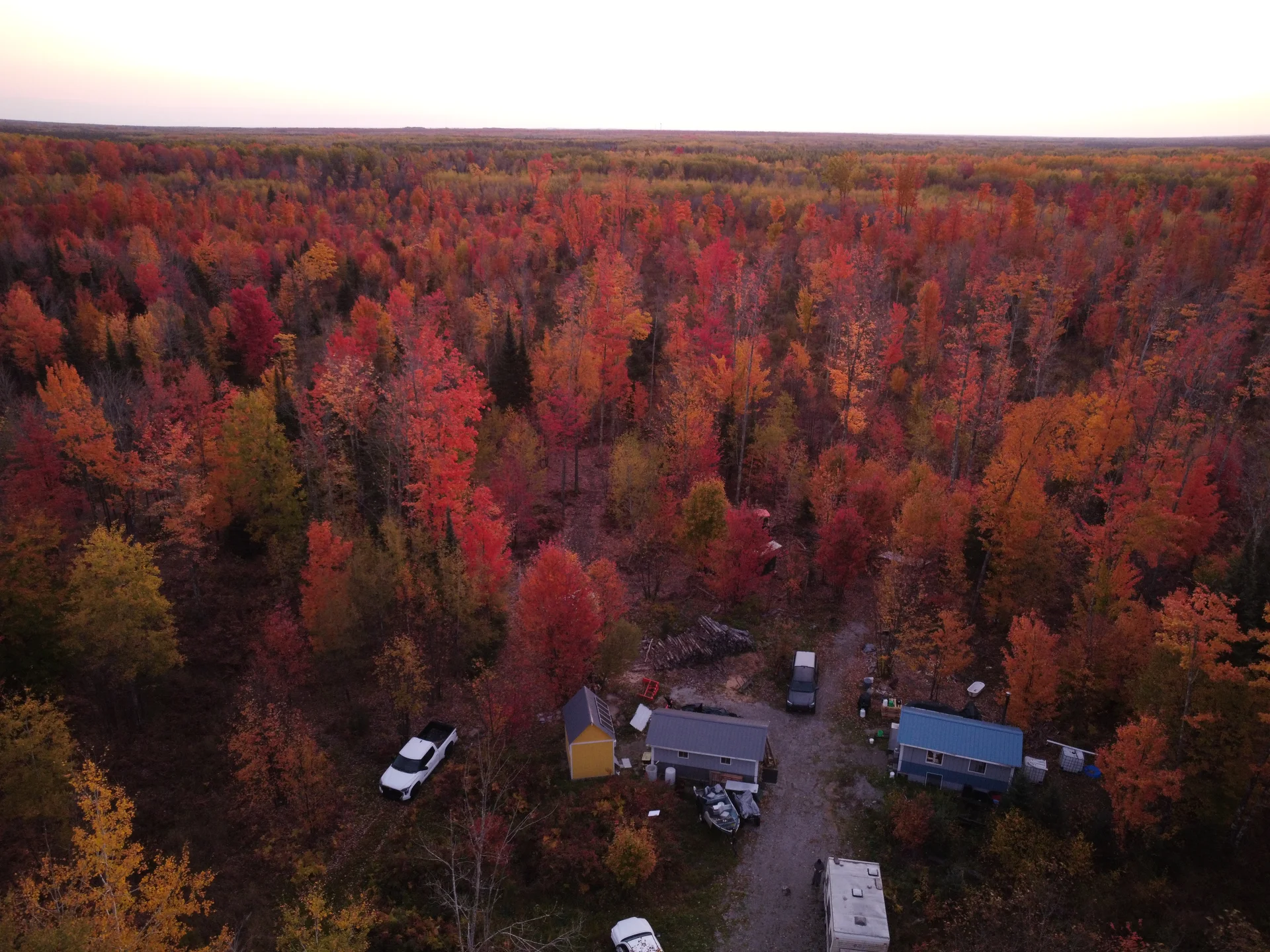
We’re Mike and Lou, and Fruition Forest Garden is our off-grid homestead tucked into the hardwoods of Michigan’s Upper Peninsula.
We came here in 2022 with a small U-Haul box, two cats, and the drive to finally build the life we’d been talking about since we got together in 2009. No structures, no utilities, nothing but a forest growing its way back from a logging cut — mostly younger growth, with a handful of older trees standing through it. Since then, we’ve been carving out a life built around responsibility, self-reliance, and a steady curiosity about how things work. One thing at a time, we’ve been shaping this place into something that can feed us, shelter us, and challenge us in the best ways.
This site is where we document the real process — the mistakes, the half-finished projects, the slow wins, and the breakthroughs — as we build systems meant to last.
Where We’re Headed
Most of our focus now is on developing food systems over the next few years, including perennial food crops, livestock rotations, and a resilient long-term food forest. We’re not in a rush. We’re building toward a future where the land feeds the animals, the animals feed the land, and we’re just the stewards in between.
Hunting and fishing have also become part of that picture. We’re still early in our journey, but we’re grateful to have our own woods to hunt in and so many lakes and rivers within reach. Success for us right now is simply showing up, learning the rhythms of the land, and becoming part of it.
Owning the Stack
“Own the Stack” is our core philosophy. It means understanding and building every layer we depend on — from soil life all the way up to the servers that run this website.
In practice, that looks like:
- Growing most of our own food through perennial plants, fodder trees, and animal activity
- Building DIY systems, we can upkeep ourselves
- Creating our own heating, power, and water solutions
- Maintaining our vehicles and equipment — including our Kubota LS3560
- Finishing and improving our buildings piece by piece
- Hosting and maintaining our own websites
- Integrating Home Assistant and ESP32 home automation projects into daily life
We’re not experts. We’re just persistent. We try things, break things, fix what we can, learn from the rest, and document the journey so others can see that it’s possible to start small and figure it out along the way.
DIY as a Way of Life
Our days are a mix of practical work and long-term planning: insulating walls, installing outlets, building shelves and floors, tiling under the wood stove, adding solar capacity, wiring sensors, and keeping our tools and machines running. Every finished project adds a little more comfort, a little more resilience, and a lot more confidence.
And now that the big foundation pieces are finally coming together — buildings, power, water, vehicle maintenance, and the site itself — we’re turning our attention to creating content again. The plan is simple: document the real process, the way it actually happens, so people can see the whole picture and not just the pretty parts.
Our Story (The Short Version)
Before Michigan, we spent almost eleven years in Oregon learning the basics: raising animals, managing steep terrain, building small systems from scratch, and figuring out what kind of life we wanted. Those lessons still guide us, especially in winter when we have more time to reflect and share stories from that chapter.
But this land in Michigan is where we’re planting long-term roots. This is the place we’re building for the rest of our lives.
Our Influences & Mentors
Larry Thompson — Thompson Farms (Damascus/Boring, Oregon)
Link: https://www.facebook.com/ThompsonFarmsDamascus/
Larry runs a diversified small-farm operation just outside Portland, growing dozens of crops without fungicides, herbicides, or pesticides. He isn’t certified organic — he simply grows food the way he believes it should be grown. When a crop fails, he turns it under and moves on, no shortcuts.
Our connection: We bought produce from Larry for years when we lived in Oregon, and he shaped a lot of how we think about land stewardship. He once told us how hard it was to walk away from the subsidies his family farm depended on and go fully independent, and that conversation stuck with us. Larry sells directly to the public and does the work on his own terms. He’s a badass, plain and simple.
Simple Living Alaska (Eric & Ariel)
Link: https://www.youtube.com/c/SimpleLivingAlaska
Eric and Ariel share their life of off-grid living in Alaska — building everything by hand, hunting, fishing, preserving food, cooking from scratch, and showing the real work behind a resilient homestead. Their videos are insightful, thought-provoking, and everything but Simple.
Our connection: Of everyone we follow or learn from, we resonate with these two the most. Their mix of self-reliance, craftsmanship, and everyday joy hits a chord with how we want to live. They make beautiful food, they build their systems piece by piece, and they do it all in a way that feels grounded and real.
The Survival Podcast (Jack Spirko)
Link: https://www.thesurvivalpodcast.com/
Jack Spirko has been podcasting for over 17 years, teaching modern survival, permaculture, independence, small business design, and how to build a life that doesn’t depend on fragile systems.
Our connection: We’ve been listening to Jack since around 2010, and he’s been one of the most influential voices in our shift toward self-reliance. His ideas helped shape our philosophy of owning the stack, taking responsibility for our needs, and designing systems that serve us instead of us serving the system.
Burnt Ridge Nursery & Orchards — Onalaska, Washington
Link: https://www.burntridgenursery.com/
A family-run mail-order nursery specializing in rare and unusual fruiting trees, edible shrubs, nut trees, and cold-hardy species for northern climates. They’re known for plants you can’t find anywhere else and for their deep knowledge of perennial crops.
Our connection: We visited Burnt Ridge back when we lived in Oregon and bought several plants for our old property. Touring the place with the owner was unforgettable — the old trees, the layout, the stories behind each specimen. It was the kind of nursery that shapes your imagination. We still look to them for inspiration as we build our perennial systems here in Michigan.