Naming Animals Doesn’t Make Harvest Harder For Us
Why This Conversation Is So Uncomfortable
There’s a tension that shows up anytime people talk about raising animals for food. You’re expected to pick a side quickly: either you care too much and shouldn’t be doing it, or you harden yourself and treat it like a task. Most of the discomfort lives inside that false paradigm.
This is how we’ve lived with animals, raised them, cared for them, and when necessary, ended their lives ourselves. Not because it was easy. Because it was honest.
The “Don’t Name Your Animals” Rule Feels Emotionally Lazy
The advice not to name animals is usually framed as wisdom. Don’t get attached. Don’t make it harder than it needs to be. Keep distance so you can do what must be done.
But that distance doesn’t actually prepare you for responsibility. It protects you from feeling. Naming an animal doesn’t make the work harder; it makes it real. It acknowledges that this is a living being you are accountable to, not a unit of production.
We’ve never wanted to separate those concerns. Caring and responsibility are not competing values. They’re inseparable.
What Actually Prepares You for Harvest
What prepares you isn’t emotional toughness. It’s routine. Familiarity. Presence.
Animals that are handled calmly, spoken to, checked on daily, and treated consistently live in a very different nervous system than animals kept at arm’s length. Stress doesn’t magically disappear at the end of life; it accumulates long before that moment.
Learning From Someone Who Did Not Look Like a “Butcher”
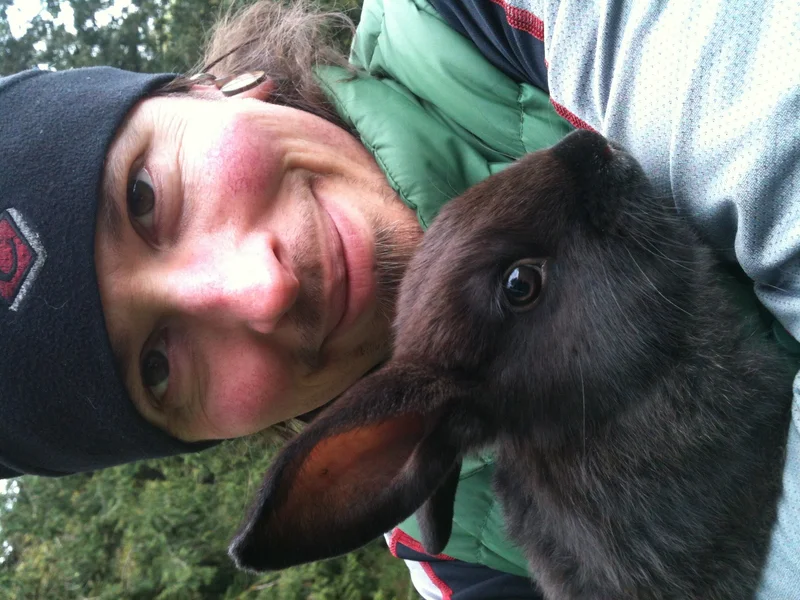
One of the most formative experiences we had was learning to harvest rabbits from a woman named Connie in the eastern suburbs of Portland. She lived on a small property—perennials everywhere, permaculture projects, a thoughtful, intentional space.
She was older than us, slight in build, calm in a way that came from repetition and respect. Before the harvest, she’d sit with the rabbit, pet it, let it relax. No rush. No drama.
When the moment came, it was decisive and exacting. The rabbit never experienced fear. Watching her taught us something essential: competence and care are not opposites. In fact, they depend on each other.
When Distance Makes Things Worse
Our first solo harvest came shortly before that. We had chickens that we had to mercy kill because they were sick. We were living in a neighborhood, working out of our garage, careful about visibility, careful about cleanliness.
It was rough. Emotionally and logistically. But it was controlled. We were present. We were careful. We were responsible.
Distance doesn’t remove harm. It just removes accountability.
Sentimentality Versus Reverence
There’s an important distinction here.
Sentimentality avoids reality. It clings to feelings while refusing responsibility. Reverence stays present in life, care, and the end.
We don’t pretend harvest is pretty. We don’t turn it into ritual theater. We treat it as something serious, final, and worthy of attention.
Love doesn’t disappear because an animal becomes food. It changes form, but it doesn’t vanish.
Living With Animals Long Enough to Be Responsible for Them
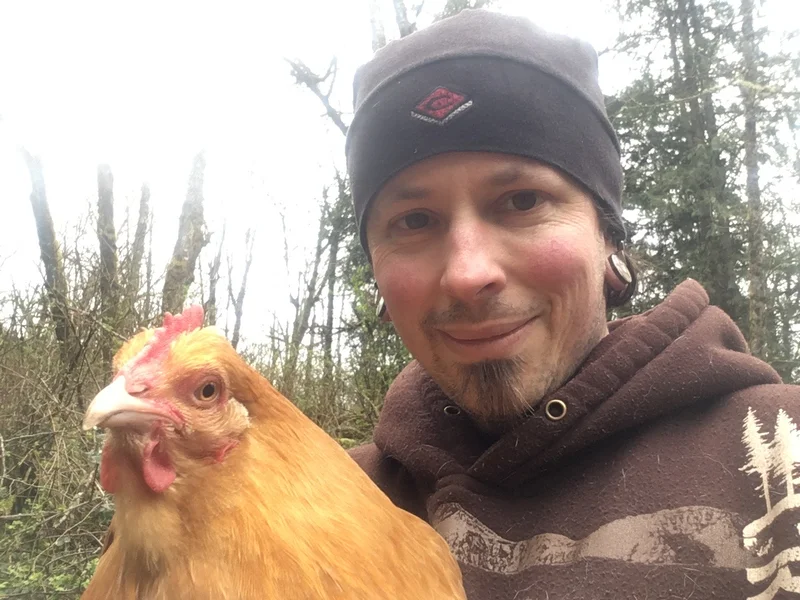
Some of our first animals never needed that decision. We had laying hens that lived long, full lives on our Oregon properties. We were prepared to act if needed, but we didn’t have to.
Responsibility includes knowing when not to intervene. It also includes being willing to act when avoidance would be easier.
Care is not defined by outcome. It’s defined by presence.
The Pigs: Why Care Made the Hardest Moment Possible
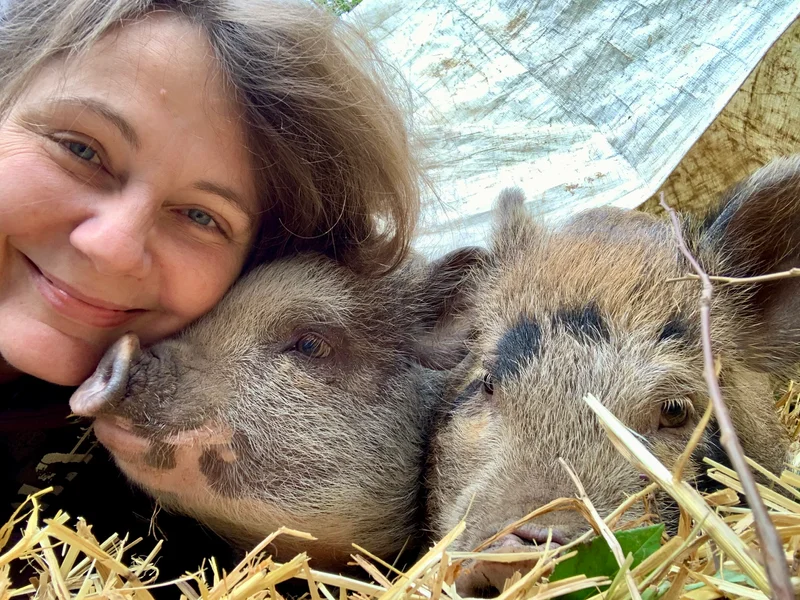
The hardest animals we’ve ever harvested were our pigs: Poppy and Porchetta.
We raised them from young piglets. We visited them daily. Walked the property with them. For a long time, we thought we might move them with us when we relocated.
Reality intervened. A cross-country move. Camper living. No place for pigs.
When the time came, we did everything we could to reduce stress. We dispatched them during a moment that was completely normal to them—eating. A routine they trusted. A life they understood.
From the outside, that trust can sound troubling. But the trust wasn’t that they would live forever. The trust was that they would be treated well every day of their lives and that the end would not be filled with fear.
The fact that I cared so much made me the best person to do it.
Why Industrial Distance Is the Real Ethical Failure
Most animals raised for food are taken from the place they know and brought somewhere foreign to die. New smells. New sounds. Stress layered on top of stress.
This distance isn’t neutral. It exists so responsibility can be outsourced and discomfort avoided.
Suffering doesn’t disappear because you don’t see it.
Death Is Not the Opposite of Care
Neglect is the opposite of care.
Responsibility means being present for all of it: feeding, tending, sickness, growth, and the end.
This way of living asks more of you. It asks you to stay when it would be easier to look away.
But it also returns something rare: an honest relationship with life, death, and the food that sustains us.