First Trees Make the Place Feel Like Home
Planting Trees Where We Plan to Stay
There are things you think you are delaying, when really you are learning the shape of the work.
That happened this spring.
We lived for eight and a half years on a beautiful, lush property in Gresham, Oregon. It backed up to a protected forest, and the place already had the kind of trees some people dream about: big cedars, giant Douglas firs, mature shade, deep green everywhere. It also came with a few apple trees and blueberries already on the property.
But in all those years, we never planted trees of our own.
Part of that was practical. The land was steep. The trees were already there. The open spaces were limited. Regional land-use rules, hillside restrictions, mature forest, and the shape of the property all influenced what was possible. It was a beautiful place, but it was not exactly a blank slate.
So our food system there leaned hard toward animals. Chickens, ducks, pigs, turkeys, goats. Over those years we raised and processed hundreds of animals. Animals could move through the system in a way fruit trees could not. They fit the openings we had.
Cornell is different.
A Different Kind of Constraint in the UP
Here in the Upper Peninsula of Michigan, the limits are not the same. We have more open ground. The property is flatter. There is more room to decide where things go. It feels much more like an open slate.
That does not mean it is easy.
The constraints here are more about season, water, soil, and execution. Where is the ground high enough? Where is it dry enough? Where is there enough soil depth above the water table? Where can we start building tilth and microbiology instead of just digging into wet clay and hoping for the best?
That is why this round of planting matters. We are not just sticking trees wherever there is a gap. We are starting to define the better ground.
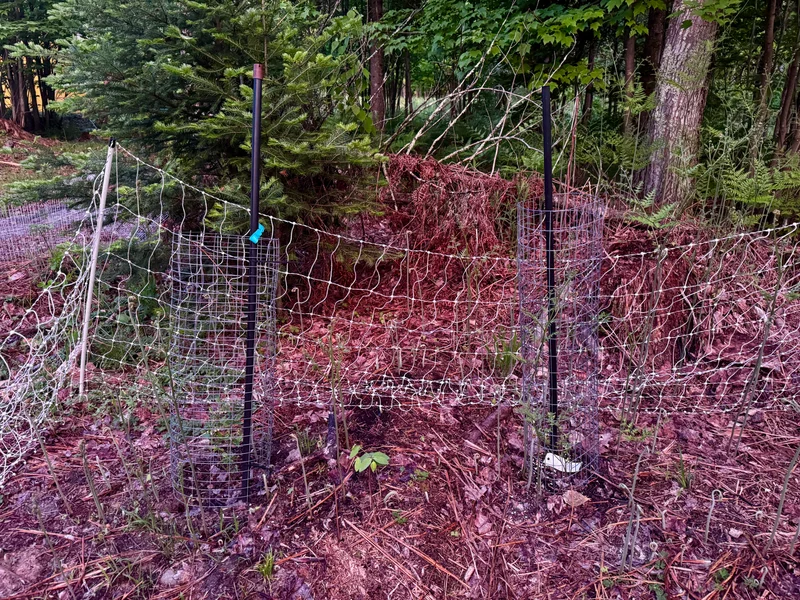
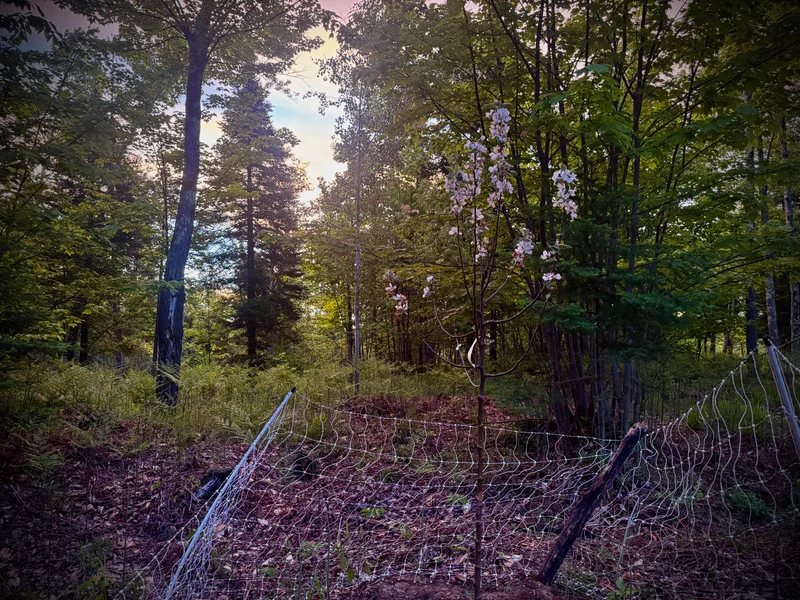
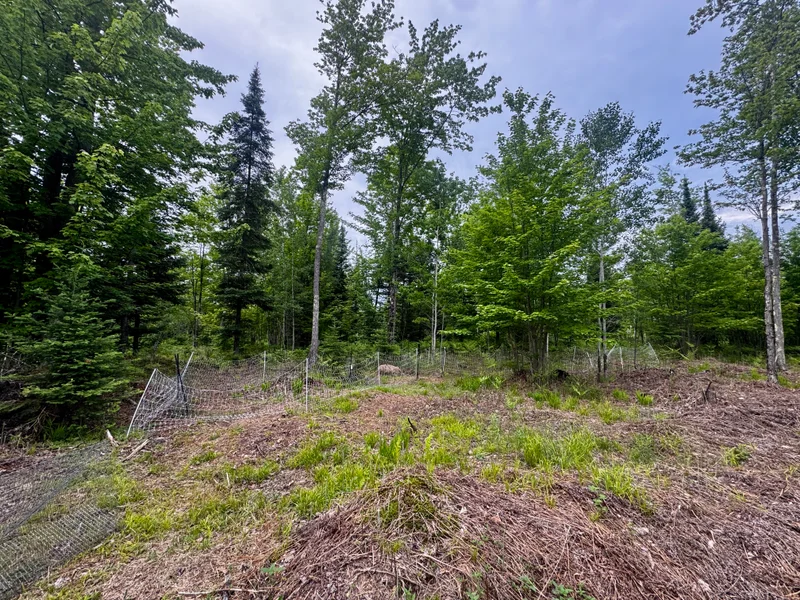
The blueberries, cherries, and Yellow Transparent apple are planted along a higher area near the route that will eventually become part of the driveway back toward our future cabin spot. They are inside what I am thinking of as an establishment fence. It does not need to be permanent forever. It just needs to protect the trees and bushes while they are small, tender, and still vulnerable to damage from animals and weather.
That is one of the funny things about planting trees. Everybody talks about the mature tree, the fruit, the shade, the future. But at the start, it is mostly a stick you are trying to keep alive.
The Trees and Plants We Brought Home
This spring, we picked up apple trees, cherry trees, blueberry bushes, and asparagus through the Delta Conservation District. That made the whole thing feel more local and grounded than just ordering from some random catalog and pretending every plant on the internet belongs here.
The apple trees are Yellow Transparent, Red Prairie Spy, and Sweet 16.
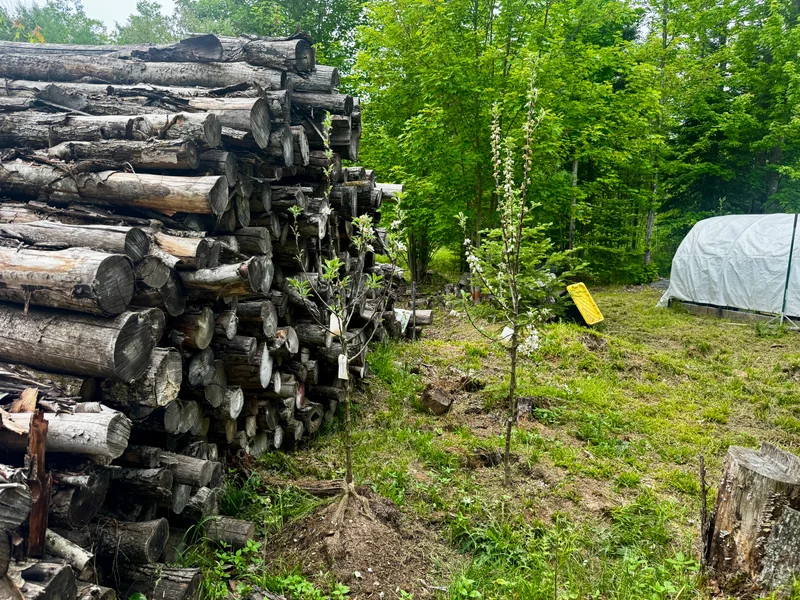
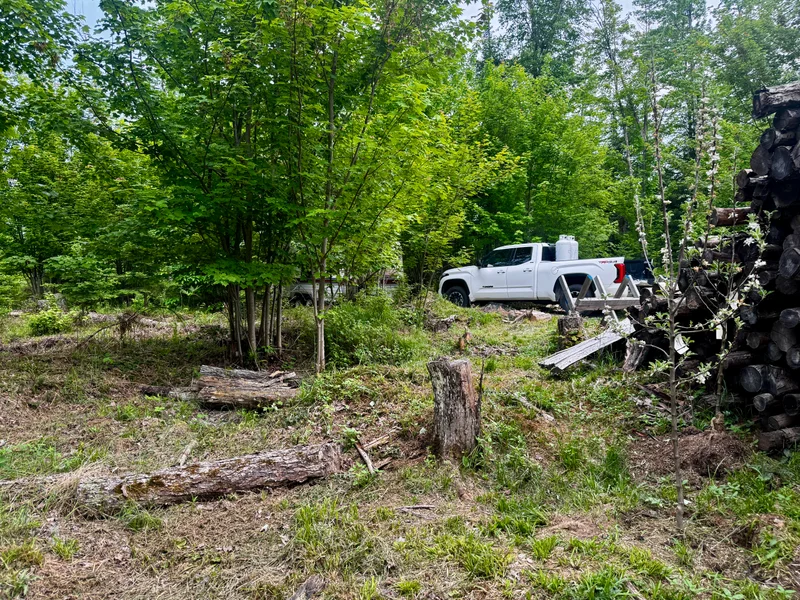
The Sweet 16 is the one that hits me the most. I have wanted a Sweet 16 apple for at least a decade. It is temporarily planted in a burlap bag near the woodpile right now, but it will be moved soon, close to the area where the camper has been sitting for the last couple of years. That spot is going to open up as we keep shifting the property from “where things landed while we were building” into “where things actually belong.”
The Red Prairie Spy is planted near the woodpile, and the Yellow Transparent is over in the establishment fence with the other early orchard plantings. The Yellow Transparent was already flowering, which makes it look a lot more romantic than the project actually is. In real life, there is fencing, rough ground, stumps, temporary locations, and a woodpile that still needs to get dealt with this year.
Which is fine. That is what this stage looks like.
The cherries are Evan’s Bali and Meteor. They are planted in the middle of that higher establishment area. These are not sweet cherry fantasy trees. They are more practical, cold-hardy, sour cherry choices, which makes a lot more sense for where we actually live.
The blueberries are Northblue, Bluecrop, and Patriot. We originally brought home four, but the Jersey did not make it. To be fair to the Jersey, it looked pretty sad when we got it. That is part of planting perennials, too. Not everything makes the cut, and not every failure is a grand lesson. Sometimes a plant just starts behind and never catches up.
We also planted ten Jersey Knight asparagus crowns. They are not as dramatic as apple blossoms, but asparagus is one of those plantings that asks you to think in years instead of weeks. You put it in, mostly leave it alone, and eventually it becomes part of the background food system.
The Plants We Chose and the Plants That Chose Us
Not everything in this story came from the conservation district.
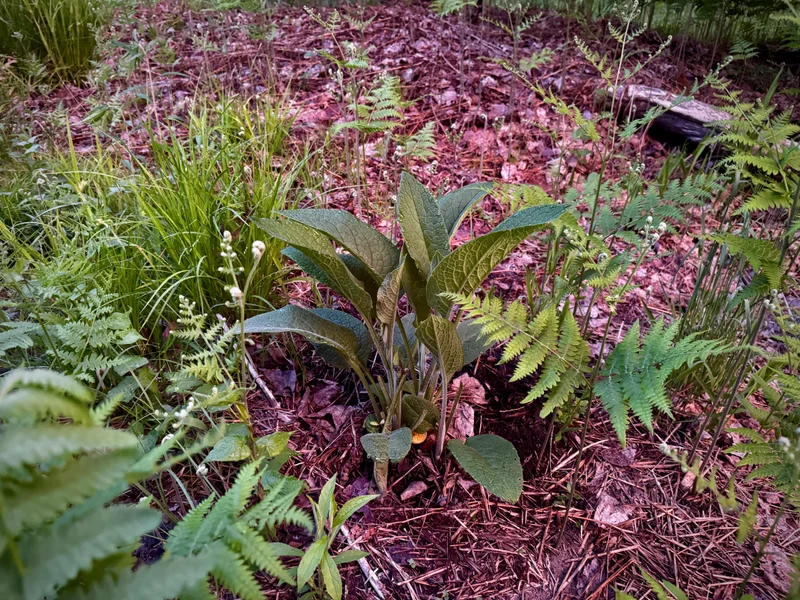
The comfrey came from my mom last fall when we went down to River Falls, Wisconsin for a visit. Right now, it is planted in the front area, but that is temporary. Eventually, I want to divide it and spread it around the property.
I think of comfrey as one of those practical support plants that earns its place over time. It grows hard, comes back after cutting, and can produce big flushes of leaves. Those leaves can become mulch, compost material, chop-and-drop fertility, or a carefully considered animal feed additive.
It also has a long history as a salve plant, though I try not to confuse “traditional use” with “anything goes.” Plants that are useful can still deserve respect. Comfrey is one of those plants I want spread around the system, but not treated casually.
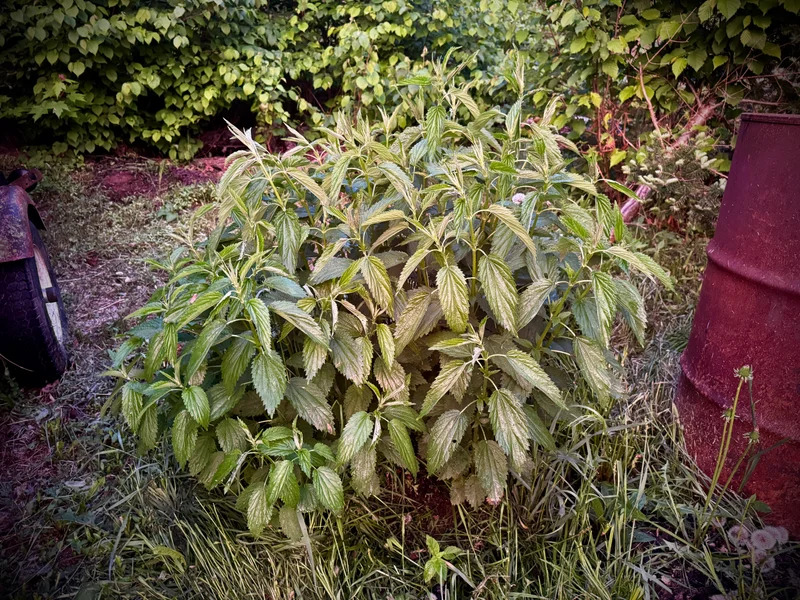
The nettles are a different story. Lou had already picked up stinging nettle seeds, and while we were still thinking through where to plant them, a healthy patch showed up beside the cabin on its own.
Some plants you order. Some plants you haul home from family. And sometimes, when the conditions are right, the land’s own seed bank offers up something useful.
I know nettles mostly as a useful, mineral-rich plant with a sting that keeps you honest. Lou already values them as an herb, and I am interested in them as another sign that some parts of this property are trying to tell us what they want to become. A volunteer nettle patch near the cabin is not the same thing as an orchard plan, but it still feels like information.
When the Property Starts to Become Home
There was another thing happening this spring too. I built a serious twelve-foot workbench in the garage. That will get its own post once I finish dialing in a few things, but it belongs in the background of this story.
The workbench and the trees happened close together. One was about having a real place to build and repair things. The other was about putting living roots into the ground and assuming we are going to be here to see what happens.
After four years in Cornell, something shifted.
I have noticed this before in life. There is a point where a place stops being just the place you moved to. It stops being temporary in your mind, even if there are always unfinished projects. You look around and realize you have been there long enough that it has become your home.
This spring, planting trees made that obvious.
On the Oregon property, the trees were already there. Here, we are choosing them. We are deciding where the road goes, where the future cabin site might be, where the high ground matters, where the soil needs to be improved, and where young plants need protection until they can stand on their own.
A fruit tree is not a quick project. You do not plant it for next week. You plant it because you are willing to imagine a future version of our homestead.
What Comes Next
There is still a lot to do. The Sweet 16 needs to get planted in its permanent spot. The woodpile needs to be handled. Rabbit cages are built, and hutches are next. The new road toward the future cabin site needs to start taking shape, and we may start digging ponds this year. We are also looking at the next round of more permanent infrastructure: the two-sided vaulted outhouse, a large woodshed, and our first real steps into concrete work and post-frame building.
That is a different kind of project list than we had a few years ago. These are not just survival projects to get through another season. They are the kinds of projects that start locking the property into a more permanent shape: roads, buildings, drainage, animal systems, firewood storage, sanitation, and trees that we hope will still be here long after the first version of the work is done.
The whole thing still looks rough because it is rough.
But it is a different kind of rough now. It is not just scattered work. It is starting to look like direction.
We planted trees this spring. Apples, cherries, berries, asparagus, comfrey, and a volunteer patch of nettles all became part of the story. Some of it was planned. Some of it showed up on its own. All of it made the property feel a little less like land we are occupying and a little more like a home place we are developing.
Sometimes when you wait to do something, you come to understand it in a different way.
This year, planting trees was not just about fruit. It was about realizing we are home.